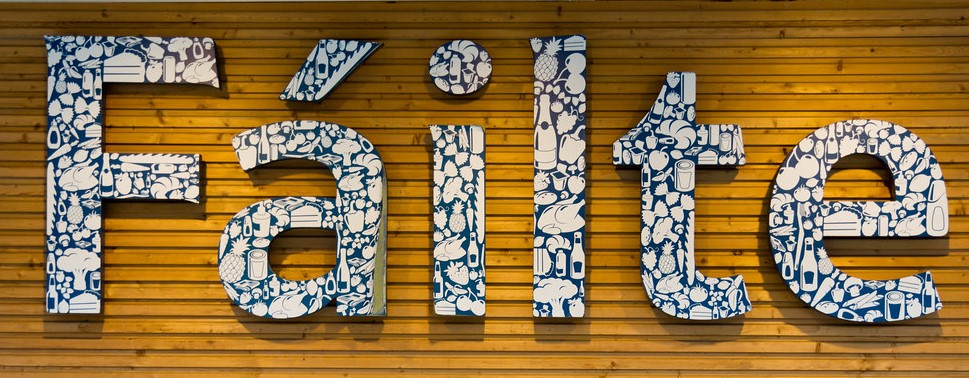
Dia dhuit! Conas atá tú? Tá mé go maith! (click here to hear the phrase, and here to see a translation).
These are just a few of the everyday phrases that I am learning in my Irish Language module this semester. When I planned my trip to study in Ireland, I decided to enroll in at least one module which focused on the culture of the country. Even though a minority of people speak Irish, I felt the module would be a unique way to learn and experience the culture, along with my Irish Folklore module.
I have not taken a language class since the last year of secondary school when I studied Spanish. Subsequently, the transition into learning Irish was slightly jarring. The language is distinctive regarding its spelling and pronunciation compared to English and the little amount of Spanish I remember. There are, however, some Irish words that spark recognition from my Spanish days, such as Dia (God in Irish) and día (day in Spanish) which both sound and are spelled the same way. The 6 common questions: who, what, when, where, why, and how, follow the same pattern and pronunciation styles between Irish and Spanish. Both usually begin with a hard “c” as in “caught” or “Kay.” The following table provides a reference.
| English | Irish | Spanish |
| Who | Cé | Quién |
| What | Cad | Qué |
| When | Cathain | Cuándo |
| Where | Cá | Dónde* |
| Why | Cén fáth | Por qué* |
| How | Conas | Cómo |
Still, when our professor talks about the various cases or parts of speech, I must admit I am slightly confused–studying engineering, I have not needed to think about proper English terminology in a while.
Despite this, I quite enjoy learning the language. This module provides a rare opportunity to learn a language a distant relative of mine may have used before. I wish I could take more than 1 semester to become more fluent, but I will continue learning through Duolingo!
Lastly, my favorite phrase of the class so far, Tóg go bog é!(click here to hear the phrase, and here to see a translation).
 Spencer's Ireland Blog